Anthony Hobley

I build markets at the intersection of capital, regulation, science and risk.

For three decades my work has focused on mapping the multidisciplinary problems where capital, regulation, technology and risk must all align before anything moves, and on designing and delivering the institutional and commercial architectures that unlock capital, manage risk, transform industries and scale solutions to complex climate, nature and sustainability challenges in ways that are both commercially viable and systemically impactful.

NORTON ROSE FULBRIGHT  ·  CARBON TRACKER  ·  WORLD ECONOMIC FORUM  ·  HOWDEN GROUP
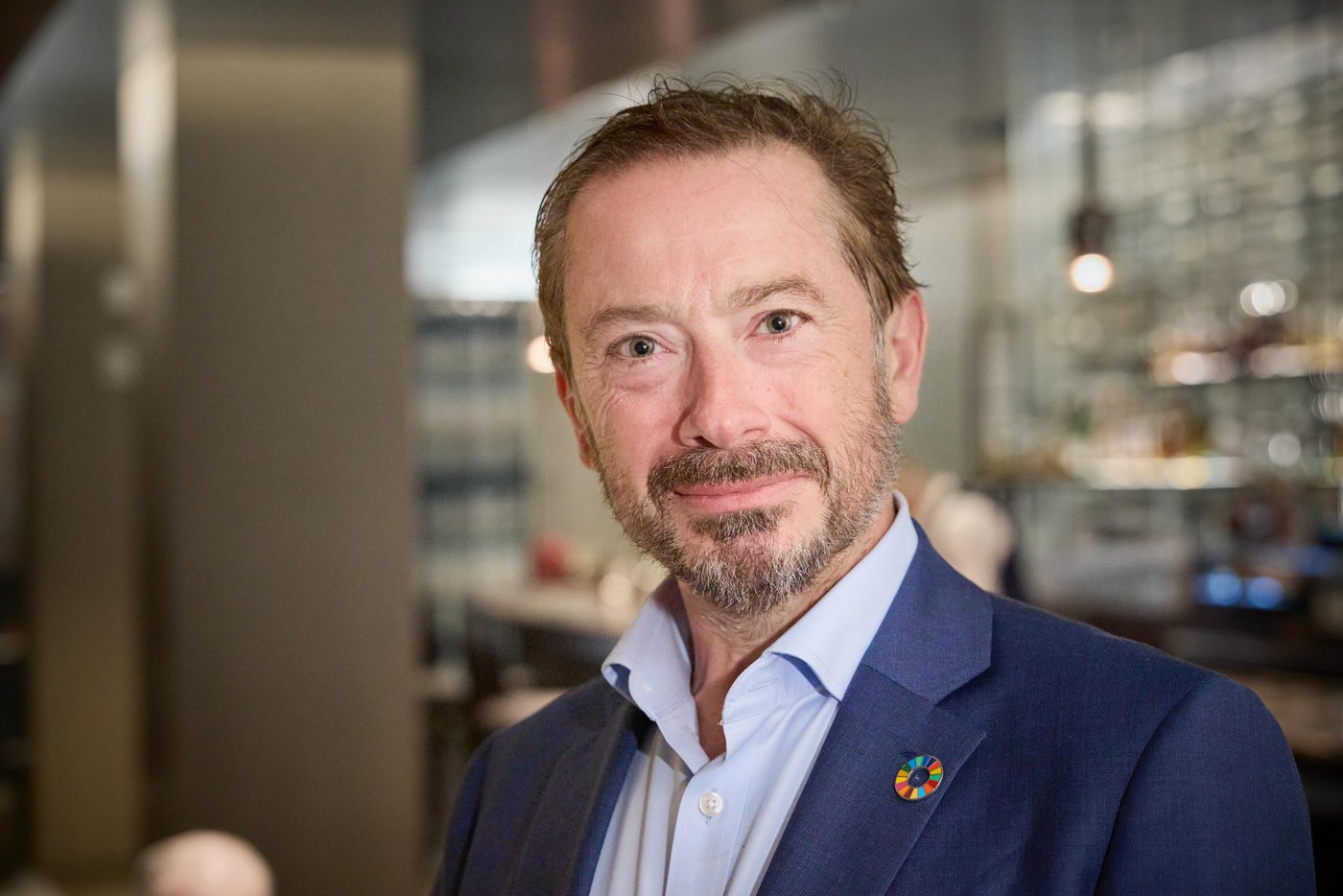
Anthony Hobley — portrait
About

Joining the dots

I have spent thirty-five years working in the joins between disciplines, e.g. law, science, finance, industry, philanthropy and policy, on the problems where capital, regulation, technology and risk all need to align before anything moves.

My career has had several distinct chapters. I trained as a transactional lawyer focused on environmental issues and spent nearly two decades in private practice, advising on mergers, project finance, real estate and the carbon markets, including the biggest sale of land since Henry VIII sold off the monasteries as part of the privatisation of the UK’s coal industry, and the reorganisation and divestment programme by chemical company ICI. At Baker McKenzie I led the legal team in the consortium that advised the European Commission on the design of the EU Emissions Trading Scheme registries system and drafted the EU Registries Regulation, the legal infrastructure that underpinned the world’s first multi-national and still the largest cap-and-trade carbon market. While there I was also part of the legal team that developed the standard carbon-markets contracts for both carbon-project offtakes and trading. I went on to build and lead the climate change practice at Norton Rose Fulbright as Equity Partner and Global Head, where I was described in the legal directories as “an ambassador for carbon markets.” Between these I was General Counsel and a voting member of the Investment Committee at Climate Change Capital, where we raised and invested a €1bn carbon fund.

I then spent five years as the first CEO of the Carbon Tracker Initiative, where the “carbon bubble” and stranded-assets analysis helped reframe how trillions of dollars of institutional capital think about fossil fuel risk. Two parts of that work helped begin efforts to rewire the financial system as part of international efforts to green it. The first was being instrumental in persuading the Bank of England, and the then Governor, Mark Carney, to champion the case for climate-related financial disclosure that became, through the Financial Stability Board, the TCFD framework. The second was building the analytically driven foundations on which the major institutional investor networks now base their climate shareholder engagement: a key step from values-based to risk-based climate stewardship.

I joined the World Economic Forum as an Executive Fellow to launch the Mission Possible Partnership, the coalition of more than 400 companies across the seven so-called “hard-to-abate” sectors representing roughly 30% of global emissions. While at the Forum I also led the team running the Alliance of CEO Climate Leaders, the largest CEO-led climate coalition, and its parallel community of climate leaders from the major NGOs and international organisations working on climate, business and finance. I helped to set up and support the First Movers Coalition, a partnership between the Forum and Secretary John Kerry’s team at the US State Department under the Biden Presidency. I went on to architect the Giving to Amplify Earth Action initiative (GAEA), the Forum’s public-private-philanthropic partnership model designed to mobilise a greater percentage of philanthropy into climate and nature by demonstrating how it could enable the $3 trillion a year required for net zero and nature recovery. GAEA was launched at the Annual Meeting in Davos 2023 with more than forty-five committed partners. Most recently I co-built the Climate Risk and Resilience platform at Howden as its Deputy Chair, where we developed and delivered a documented commercial methodology for converting institutional impact-driven thought leadership and multilateral engagement into multi-line brokerage and reinsurance revenue.

Different chapters, but the same underlying work in each. The pattern is to identify where a market needs to exist but doesn’t yet, build the institutional, commercial and intellectual scaffolding required to close that gap, mobilise the coalitions that give it momentum, and deliver returns measured both in capital flows and in transition impact. The second enables the first, and neither works alone. Aligning profit with impact to create wealth worth having.

A consistent theme across that work is that impact is not a constraint on commercial success. When designed correctly, it becomes the mechanism that enables it: expanding markets, unlocking new client segments, creating revenue pools that would not otherwise exist. This is not a slogan. It is the architecture of every market I have helped to build, from the EU Emissions Trading Scheme and carbon-project mechanisms in the early 2000s to the Enabling Insurance Breakthrough at Howden in 2025.

The bedrock under all of it is unusual and probably worth flagging. I trained as a scientist, First-Class degree in Chemistry and Physics, postgraduate research at Cambridge, before complementing the iterative, systematic, objective process of the scientific method with the cognitive legal process that prioritises logical analysis, issue spotting, and emotionless assessment of facts against the law. I am a qualified solicitor of England and Wales of more than thirty years’ standing. I have closed real commercial transactions, sat on real Investment Committees, raised real money, and built real organisations. The systems-change work is grounded both in the science and in how commercial reality actually works, not in how it should work. That combination, scientific analytical foundations, regulatory and legal fluency, transactional experience, executive delivery, and the convening authority to operate credibly across private, public and civil society sectors, whether with UN leadership, national finance ministries, COP presidencies, philanthropic principals, NGO leaders or Fortune 500 CEOs, is rare.

The current preoccupation, reflected across the writing on this site, is the missing translation layer between the probabilistic risk analytics that the insurance industry has built over three centuries and the language of mainstream financial valuation. With all the climate and nature data the world now has, our alphabet soup of initiatives such as IPCC, TCFD, TNFD, CDP, ESG frameworks, the thousands of investment decisions made every day by CFOs, investment committees, asset managers and finance ministries are still made as if that data does not exist. The gap is not data. The gap is translation: the data is not reaching decision-makers in a decision-relevant form, in the one language they actually use, which is money. Closing that gap is the work I expect to spend a substantial part of the next phase on.

I am now building toward that next phase on three concurrent tracks: founding leadership of new initiatives at the frontier of climate, nature and finance; selective paid strategic advisory; and non-executive director and trustee positions on commercial boards and substantive foundations where the combination of governance experience, board judgement, commercial transaction background and subject-matter authority is materially additive. I am open to conversations on any of these.
Selected Work

Six dimensions of impact

Six markets, mobilised. Each card maps to a body of work where the institutional, commercial and intellectual scaffolding had to be built before capital could flow.

Carbon markets — built and operationalised

Led the legal team in the consortium advising the European Commission on the design of the EU Emissions Trading Scheme registries system and drafted the EU Registries Regulation. Instrumental in developing the market-standard documentation including the ubiquitous Emission Reduction Purchase Agreement (ERPA) and ISDA Framework Agreements for EUA trading. Voting Investment Committee member at Climate Change Capital, deploying a €1bn carbon fund. Founded the Climate Markets & Investment Association (CMIA) and Businesses for a Clean Economy (Australia, 400+ members). Member of the VERRA (then Voluntary Carbon Standard Association) board for its first six years.

BAKER McKENZIE  ·  CLIMATE CHANGE CAPITAL  ·  NORTON ROSE FULBRIGHT

Climate risk reframed for financial markets

First CEO of the Carbon Tracker Initiative, where investment-grade analysis verified the risks of stranded assets and fossil-fuel demand destruction from the growth of clean technologies, reshaping institutional thinking on fossil-fuel risk. Instrumental in persuading the Bank of England under Governor Mark Carney to champion the concept of climate-related financial disclosure, foundational to the TCFD framework. Responsible for aggregate fundraising of approximately £30m+ across the five-year tenure, with the work winning two consecutive Guardian Sustainable Business Communications prizes.

CARBON TRACKER  ·  BANK OF ENGLAND  ·  FINANCIAL STABILITY BOARD

Industry decarbonisation platforms designed and delivered

Founding Executive Director of the Mission Possible Partnership as an Executive Fellow and member of the Executive Committee at the World Economic Forum. The Forum’s industry decarbonisation programme, which I was responsible for launching and delivering, mobilised more than 400 companies across the seven hardest-to-abate sectors (shipping, aviation, trucking, chemicals, steel, aluminium, cement) representing approximately 30% of global emissions. I helped design and shepherd the structure that allowed MPP to spin out as an independent NGO.

WORLD ECONOMIC FORUM  ·  ENERGY TRANSITIONS COMMISSION  ·  ROCKY MOUNTAIN INSTITUTE

Demand-side market signals mobilised through coalitions

Supported the launch of the First Movers Coalition with the US State Department team led by Secretary John Kerry. Led the Forum’s Alliance of CEO Climate Leaders, the largest CEO-led climate coalition, and its parallel community of climate leaders from the major NGOs and international organisations working on climate, business and finance.

WORLD ECONOMIC FORUM  ·  US STATE DEPARTMENT  ·  ALLIANCE OF CEO CLIMATE LEADERS

Philanthropic capital unlocked at scale

Founding architect of GAEA (Giving to Amplify Earth Action), the WEF’s flagship public-private-philanthropic partnership model launched at Davos 2023 with 45+ partners, designed to help unlock the $3 trillion a year required for net zero and nature recovery.

WORLD ECONOMIC FORUM  ·  BEZOS EARTH FUND  ·  GAEA INITIATIVE

Institutional access platform built at Howden

Deputy Chair, Climate Risk & Resilience, 2024–2026. Co-architect of the BCG-validated Authority–Beachhead–Commercial (ABC) conversion model. On the team’s own analysis, approximately 78% of the recommendations submitted by CRR to the COP30 process were reflected in the UN HLEG 4th Report and the COP30 Circle of Finance Ministers Report.

HOWDEN GROUP  ·  UN HIGH-LEVEL CLIMATE CHAMPIONS  ·  BOSTON CONSULTING GROUP
Flagship Reports

Co-authored and contributed

Five Howden reports presented as substantive research outputs distinct from the article series. Reverse chronological.

Nov 2025 Howden, BCG & UN High-Level Climate Champions

Rooted in Resilience

The Role of Insurance in Scaling Regenerative Agriculture and Re/afforestation

The COP30 companion to The Great Enabler. Demonstrates with portfolio-level modelling that each $1 of insurance premium can unlock between $3 and $10 of additional lending, with case-study work on Brazil’s Cerrado showing a $55 billion investment opportunity by 2050 of which more than 80% depends on private finance. Sets out the operational pathway by which insurance translates from concept into capital flow for regenerative agriculture and re/afforestation.

Read the report →
Jun 2025 Howden

The Insurability Imperative

Introduces the Climate Insurability Framework: a four-lever assessment for risk modelling, risk management, risk sharing, and public policy, designed to embed insurability into board-level strategic planning rather than treating it as a procurement function. Argues, with case studies including European agriculture and sovereign resilience, that maintaining insurability is becoming as material to access to capital as maintaining a credit rating.

Read the report →
Nov 2024 Howden, BCG & UN High-Level Climate Champions

The Great Enabler

A Collection of Insurance Solutions Powering $10 Trillion of Climate Finance

The official COP29 paper. Demonstrates with real-world examples how insurance enables climate finance across three domains: financial risk reduction and mobilisation of capital, optimisation of operational and project performance, and public policy implementation and market expansion. The reference document that anchored insurance’s elevation onto the formal COP29 finance-day agenda for the first time, with over 105,000 views.

Read the report →
Oct 2024 Howden & Pollination

Through the Wilderness

The Role of Insurance in Unlocking Nature Finance

The first systematic treatment of how insurance can unlock the financing required to triple investment in nature by 2030, written ahead of CBD COP16 in Cali. Sets out the four core roles the sector must play in nature finance: risk transfer to mobilise capital, protection of natural assets, enablement of trading in environmental markets, and governance, arguing that the absence of risk-transfer infrastructure is the binding constraint on the $700+ billion biodiversity finance gap.

Read the report →
Jun 2024 Howden & BCG

The Bigger Picture

The Role of Insurance in Mobilising the Climate Transition

The first major piece of research demonstrating that over half of the $19 trillion already committed to climate transition financing through 2030 will require additional insurance coverage, and that insurance must shift from annual procurement to long-term partnership if the market is to meet that demand. Identified the move from backwards-looking to forward-looking risk pricing as the precondition for closing the gap, and led to the launch of the Enabling Climate Insurance Breakthrough partnership between Howden and the UN High-Level Climate Champions.

Read the report →
Writing

The Climate Risk & Insurance series and earlier articles

Three thematic groups, reverse-chronological within each. Linked to the canonical source where they were first published.

Insurance, Climate & Nature Finance

2025 — Present

Global Ideas for Global Challenges: A Celebratory Panel in Honour of Nick Stern on His 80th Birthday

A reflection on the LSE evening at which Christine Lagarde, Kristalina Georgieva and Ngozi Okonjo-Iweala marked Lord Stern’s 80th birthday, and the three questions left unasked from the floor: on structural short-termism, on the category error of standard economic discount rates, and on whether insurance is the financial sector’s best-placed instrument to translate physical reality into a price signal.

Read on LinkedIn →

Insurance at the Crossroads: Diagnosis Reached — But Has the Sector Chosen Its Path?

A readout from the Insurance in a Changing World 2026 event at The Conduit, examining whether the sector’s emerging consensus that insurance is “system-critical infrastructure” will translate into the structural inflection point required: moving upstream from product to design partner, and from probability modeller to forward-price-signal provider for climate risk.

Read on LinkedIn →

Insurance at the Crossroads: Taking Its Seat at the Top Table?

Written ahead of the Conduit Club’s flagship 2026 industry gathering: argues that the insurance sector now faces a generational choice between continuing to operate as a downstream commoditised product business and accepting its emerging role as foundational infrastructure for the global climate finance architecture.

Read on LinkedIn →

From Risk to Value: Making Nature Investable — From Theory to Practice

Sets out four concrete dimensions of work the insurance sector must lead to make nature finance investable at scale: risk transfer in the capital stack, the Galápagos and UK Biodiversity Net Gain models, and the case for the sector to build the equivalent of forward price curves for nature itself.

Read on LinkedIn →

The Missing Keystone: Why Insurance is the Load-Bearing Wall of Biodiversity Finance

Identifies a consequential blind spot shared by the IAPB, OECD and WEF/McKinsey biodiversity finance frameworks, each treating risk transfer as a downstream consideration rather than as a foundational market design requirement, and argues that the $700 billion biodiversity funding gap will not close without that correction.

Read on LinkedIn →

Insurance: The Missing Off-Ramp from Development Finance

Reframes insurance as part of the financial system’s capital architecture, namely pools of contingent risk capital, deep in developed economies and shallow in emerging ones, identifying the absence of those pools as one of the most under-recognised structural bottlenecks preventing development finance institutions from rotating out of climate investments at the speed required.

Read on LinkedIn →

Lost in Translation: Why Climate Data Isn’t Changing Investment Decisions

A condensed companion to the longer “Climate Disclosure Paradox” piece: argues that the reason thirty years of climate data have not changed investment decisions is not ignorance but a translation issue, climate risk is not being communicated in an investment-decision usable form in the right language for the people who actually allocate capital.

Read on LinkedIn →

Mind the Gap: Why the Insurance Protection Gap Creates a Climate Finance Shortfall and How to Fix It

Sets out how the COP30 Circle of Finance Ministers Report is the operational blueprint for what the HLEG 4th Report set out at the strategic level. Illustrated with fourteen real-world case studies to demonstrate how insurance enables the $1.3 trillion climate finance agenda, and why closing the protection gap is a financial-architecture problem.

Read on LinkedIn →

Insurance Becomes the Third Strategic Pillar of the Climate Finance Stool: The HLEG 4th Report

Marks the moment at which public and private insurance was formally elevated, with the publication of the Independent High-Level Expert Group’s Fourth Report under Lord Stern, alongside public and private finance as a third strategic pillar of the global climate finance architecture rather than an adaptation footnote.

Read on LinkedIn →

The Insurance Elevator for Climate Finance

Introduces the Insurance Elevator: a model for integrating insurance earlier, more systematically and more innovatively into project development and financing, on the argument that the sector’s most valuable contribution to climate finance is not paying claims after disasters but acting as a structural enabler of the investment decisions made before them.

Read on LinkedIn →

Lost in Translation: The Climate Disclosure Paradox and the Missing Price Signal

Names the central paradox at the core of climate finance, that the world has the most comprehensive risk dataset in human history, and capital allocators continue to make decisions as if it does not exist, and traces the cause to a translation failure: climate data has never been converted into the forward price signals investment committees actually use.

Read on LinkedIn →

A Watershed Moment: Insurance as the New Foundational Pillar for the $1.3 Trillion Climate Finance Agenda

The inaugural article in the Climate Risk and Insurance series: charts how, in two years, the insurance sector moved from peripheral to foundational in the global climate finance conversation, and what the 12-month renewal cycle, commoditised product model and short-term incentive structures will need to change for the sector to fulfil the role the HLEG 4th Report has now formally assigned it.

Read on LinkedIn →

An Insurance Sector Paradigm Shift on Climate to Enable Climate Action at Scale

Marks the moment, after two years of work through the Enabling Insurance Breakthrough partnership between Howden and the High-Level Climate Champions, at which insurance moved from afterthought to foundational pillar of the international climate agenda, evidenced at COP30 Belém by 80 mentions of insurance in the HLEG 4th Report (up from three in 2023) and 67+ in the COP30 Circle of Finance Ministers Report.

Read on LinkedIn →

De-Risking Climate Action in Rio: We Can’t Finance the Future Without Insurance — COP30 is Our Moment to Change That

Written from Rio Climate Action Week: sets out why the international climate finance architecture has, for over a decade, almost entirely overlooked the role of insurance, and why the road from Baku COP29 to Belém COP30, via the Brazilian Climate and Ecological Transformation Investment Platform, is the moment to integrate insurance as a central pillar.

Read on LinkedIn →

Industry Decarbonisation & Net Zero Transitions

2020 — 2023

Welcome to the New Climate Bazaar: NY Climate Week

A reflective readout from a New York Climate Week of more than 550 events, capturing the field’s energised but fragmented mood including the politicisation of ESG, hopeful signals from the Inevitable Policy Response forecast, and an early observation that the role of risk and insurance was beginning to surface as the next missing piece in the climate finance puzzle.

Read on LinkedIn →

How Philanthropy Can Unlock Action on Climate and Nature in This Critical Decade

Co-authored with the WEF’s Centre for Nature and Climate to launch GAEA at Davos 2023: argues that philanthropy’s six unique characteristics make it uniquely placed to catalyse public-private-philanthropic partnerships that can unlock the $100+ trillion required to reach a climate- and nature-positive economy. Also published on Eco-Business.

Read on LinkedIn →

What if We Could Predict the Future? The IPCC’s 6th Assessment Synthesis Report (AR6)

On the publication of AR6: asks why repeated “final warnings” from the world’s scientists have failed to produce a societal response commensurate with the diagnosis, and explores whether forward-looking scenarios, even “useful fiction” of the kind written by Kim Stanley Robinson and Stephen Markley, can do the work that scientific reports cannot.

Read on LinkedIn →

How to Deliver on Climate Pledges? Look at These Industries Transitioning to Net Zero

Co-authored with E3G and the WEF: sets out the granular 2030 milestones the so-called harder-to-abate industrial sectors need to achieve, including numbers of green steel plants, zero-emission trucks, green shipping corridors and volumes of sustainable aviation fuel, and the five-lever framework (supply, demand, finance, policy, just transition) required to get there.

Read on LinkedIn →

The Choreography Needed for Net-Zero Industry Transition

Outlines that a successful industrial transition requires a synchronised “choreography” between public policy, financial, and technological interventions. Shifts focus from merely setting pledges to practical, coordinated implementation to accelerate decarbonisation.

Read the whitepaper →

Net-Zero to Net-Negative: A Guide for Leaders on Carbon Removal

A whitepaper developed by the World Economic Forum’s Global Future Council on Net-Zero Transition and the Alliance of CEO Climate Leaders. Provides a roadmap for business and policy leaders to scale carbon dioxide removal (CDR) to meet Paris Agreement targets.

Read the whitepaper →

Industry Transition Goals: Setting up COP26 for Success

Argues that sectoral net-zero agreements bringing together government and industry are the mechanism that can deliver a successful COP26, and ensure the world hits the ground running afterwards in the seven hardest-to-abate sectors.

Read on weforum.org →

To Reach Net Zero, the Shipping Sector Needs Political Support

Sets out the case for political support and large-scale sector, cross-sector and public-private collaboration as the precondition for tackling shipping emissions and meeting international climate targets.

Read on weforum.org →

Unlocking Large-Scale, Long-Term Capital for Sustainable Mobility

An insight report introducing key mobility investment archetypes. Outlines a collaborative framework to accelerate zero-emission mobility, addressing the lack of large-scale financing for the transport sector and proposing key investment archetypes.

Read the report →

Why Decarbonising Industry is a Team Sport

Co-authored with the Energy Transitions Commission and the Mission Possible Partnership: draws lessons from how renewables fell 71–90% in cost over a decade and argues that the same trajectory is achievable for green hydrogen, ammonia and synthetic fuels, but only through coordinated public-private and public-public collaboration across the carbon-intensive industries.

Read on LinkedIn →

The Real Economy is Not a Side Event in the Global Decarbonisation Effort

Argues that the real economy, and the harder-to-abate sectors in particular, must move to the centre of climate action if the world is to avoid the worst impacts of climate change, not be treated as a supporting cast.

Read on weforum.org →

A Net-Zero World Needs Zero-Carbon Concrete. Here’s How to Do It

Co-authored with the Global Cement and Concrete Association at the launch of the Concrete Action for Climate initiative: lays out the technology, demand-side and policy pathway by which the second-most-used substance on the planet, currently 7% of global emissions, can reach carbon-neutrality by 2050.

Read on LinkedIn →

Energy Transition 101: Getting Back to Basics

The energy transition is a complex, multi-faceted process designed to move the world from fossil fuels to sustainable, renewable energy systems. The briefing emphasises that the transition is not just about changing energy sources, but about creating a more inclusive, sustainable, affordable, and secure energy system.

Read the briefing →

These Are the Breakthroughs We Need to Achieve a Net-Zero World

Co-authored with UNFCCC High-Level Champion for COP26 Nigel Topping: sets out the Mission Possible Partnership’s four-step theory of change for the seven hardest-to-abate sectors, the framework by which more than 400 companies have been mobilised to chart sectoral pathways from net-zero pledge to net-zero delivery.

Read on LinkedIn →

Net-Zero Challenge: The Supply Chain Opportunity

Shows why decarbonising supply chains is a massive, untapped “game changer” for corporate climate action, with eight supply chains accounting for over 50% of global greenhouse-gas emissions. Highlights that by addressing Scope 3 emissions, companies can multiply their climate impact and unlock competitive advantages.

Read the report →

We Can’t Wait to Act! Here’s How to Get to Net Zero Emissions

Sets out four concrete actions companies must take, regardless of how the recovery from COVID-19 unfolds, to be credible participants in the net-zero transition.

Read on weforum.org →

Tackling the Harder-to-Abate Sectors

Frames why reducing emissions from transport and heavy industry is critical to a zero-carbon future, and what the Forum’s Industry Transition Day was designed to advance.

Read on weforum.org →

Aluminium Can Help to Build the Circular Economy. Here’s How

On the role of aluminium in a circular economy that could reduce emissions from the production of key materials by 40% by 2050.

Read on weforum.org →

How Green Stimulus Measures Could Fuel the Decarbonisation of Shipping

Argues that policymakers designing post-COVID stimulus measures should invest in the shipping industry’s green transition, with the Getting to Zero Coalition’s framework as the operational blueprint.

Read on weforum.org →

Climate Risk, Carbon Markets & Stranded Assets

2014 — 2019

We Are at a Critical Inflection Point in the Transition to Greening Our Financial Systems

A series of recorded conversations with figures including CalPERS’ Anne Simpson on Climate Action 100+, Dr Ma Jun on China’s green finance strategy, the European Commission’s Olivier Guersent on the EU sustainable finance taxonomy, and the Chair of the UN PRI on the connectivity between nature, climate science and systemic risk.

Read on LinkedIn →

Transition at Davos: Joining the Dots

On Davos 2019: how the parallel universes of big business, finance and civil society at the World Economic Forum each inhabit their own intellectual world, and what it would take to translate climate risk into the language each of them uses to allocate capital.

Read on Carbon Tracker →

Is Shell Really Turning Its Back on Fossil Fuels?

Examines Shell’s decision to pull out of Arctic exploration and to fund the new Energy Transitions Commission, and asks whether this represented a genuine strategic shift or a more carefully managed pivot.

Read on Carbon Tracker →

Are the ‘Red Flags’ Out for Renewables?

Reflects on the contradictory signals around clean energy in late 2015, falling costs and rapid deployment but rising political pushback in the UK and elsewhere, asking whether the resistance is symptomatic of renewables genuinely threatening the status quo.

Read on Carbon Tracker →

Rural Poor Aren’t Going to Wait for Centralised Clean Coal

A response to the World Coal Association’s positioning of coal as a saviour of the global poor: argues, with structural data on falling demand and rising stranded-assets risk, that this framing serves the industry rather than the populations it claims to serve.

Read on Carbon Tracker →

The Cost of Inaction: Recognising the Value at Risk from Climate Change

Acknowledged contributor. Estimated that climate change could put US$4.2 trillion of manageable financial assets at risk in present-value terms; under more extreme 6°C warming scenarios, this value-at-risk could rise to US$13.8 trillion.

Read the report →

Climate Challenge: Generals, Financial Regulators and Fighting the Last Crisis

Reflects on a 2013 OECD speech by Secretary General Ángel Gurría and the parallel he drew between the financial crisis and the climate crisis, and asks why, despite better foresight on climate than was available before 2008, financial regulators were doing comparatively little to prepare.

Read on LinkedIn →

Are Financial Regulators Prepared if the Market Misreads Climate Risk?

Co-written with Robert Schuwerk: examines the parallels between the build-up to the global financial crisis and the build-up of climate-related stranded-asset risk, and argues that macro-prudential regulators must be proactive, rather than risk being asked, after the fact, who was responsible.

Read on LinkedIn →

What Will Success for Paris, COP21 Look Like?

Sets out, ahead of COP21, what genuine progress would look like as opposed to a re-run of Copenhagen, a framework that proved prescient when the Paris Agreement was finalised in December 2015.

Read on Carbon Tracker →

When Does the “Carbon Bubble” Become a Systemic Risk?

Develops the orderly-versus-disorderly transition framework that has since shaped much of the climate financial-stability debate, arguing that the carbon bubble is not a present systemic risk but is becoming one if the world delays the transition long enough that policy action arrives late, fast and severe.

Read on LinkedIn →

Facing Up to the ‘Fossil Fuel Risk Premium’

Coins the term “fossil fuel risk premium” to describe the structural under-pricing of climate-transition risk in fossil fuel investment, drawing on Carbon Tracker’s Carbon Supply Cost Curves to identify the “dirty trillion”: projects requiring $95+ per barrel that were already at risk of stranding under existing policy and demand trends.

Read on LinkedIn →

Unlocking Funding for a Vital Low-Carbon Future: The Elephant in the Room

Written ahead of the Paris climate talks: identifies the elephant in the room of climate finance, that global capital markets remained roughly twenty-three times more focused on fossil fuels than on renewables, and sets out the six conditions required to level the playing field between brown and green capital.

Read on LinkedIn →

U.S. Shale Oil and Gas: Going Over the Hedge?

Reports a Carbon Tracker analysis showing that US shale producers had been shielded from collapsing oil prices by hedging positions due to expire at the end of 2015, and asks whether investors and creditors had correctly priced the financial risks the sector was running.

Read on LinkedIn →

A Fossil Fuel Transition Blueprint for a Climate Secure Energy System

The launch of Carbon Tracker’s Blueprint series, a transition roadmap for the fossil-fuel industry: arguing that companies failing to stress-test their business models against credible low-carbon, low-price scenarios were exposing investors to substantial value destruction.

Read on LinkedIn →

Keystone XL Still Fails President Obama’s Carbon Test at Lower Oil Prices

Co-written with Mark Fulton: applied Carbon Tracker’s economic analysis to the Keystone XL pipeline question at lower oil prices, demonstrating that the pipeline failed President Obama’s carbon test even before the climate argument was reached.

Read on Carbon Tracker →

How the Oil Price Collapse Can Deliver the Boost the Green Economy Needs

Argues that the oil price collapse of late 2014 and early 2015, far from setting back the clean-energy transition, created the financial conditions in which it could accelerate, a thesis that proved correct over the subsequent decade.

Read on Carbon Tracker →
Earlier Publications

Peer-reviewed, legal, practitioner

Peer-reviewed academic work, legal journals, and the Norton Rose Fulbright practitioner corpus from the founding era of the carbon markets. This material establishes the technical depth that grounds the contemporary writing.

Three Years to Safeguard Our Climate

Nature, Vol. 546 No. 7660, 28 June 2017

Co-authored with Christiana Figueres, Hans Joachim Schellnhuber, Gail Whiteman, Johan Rockström and Stefan Rahmstorf. A peer-reviewed comment in Nature setting out a six-point plan for halving global emissions by 2020 across energy, infrastructure, transport, land use and finance: arguing that the next three years were critical to keeping global temperature rise within manageable limits, and that the fossil-free economy was already economically profitable. Republished and discussed across the World Economic Forum, the IPCC research community, and major international climate science institutions. Read in Nature →

Linking Emissions Trading Systems

CATEP Workshop, Budapest, February 2003

Cited in the OECD’s 2004 publication Greenhouse Gas Emissions Trading and Project-based Mechanisms as foundational analysis on the legal status of emissions allowances under different national trading schemes, establishing that EU ETS allowances constitute property rights protected under EU law, the European Convention on Human Rights, and Member State domestic law.

Book chapters

Selected legal and academic publications, 2003–2005

Norton Rose Fulbright Global Climate Change publications, 2007–2014

As Equity Partner and Global Head of Climate Change & Carbon Finance at Norton Rose Fulbright, Anthony was lead author on the firm’s Global Climate Change client publications, with detailed analysis covering the EU Emissions Trading Scheme, the Australian Clean Energy Package, the UNFCCC Copenhagen and Durban negotiations, the Kyoto Protocol JI/CDM mechanisms, REDD+, CCS and carbon market integration. The corpus includes over twenty distinct pieces published between 2009 and 2012 alone, available through Lexology. Selected examples:

CMS Cameron McKenna and earlier writing

Selected Speaking Engagements

Speaking

Anthony has been invited to speak at the world’s most senior climate, finance and policy gatherings for over a decade. The following is a representative selection rather than a comprehensive list.

By invitation of heads of state and the UN

  • UN Secretary-General’s Climate Summit, UN General Assembly Hall, New York — 23 September 2014. Spoke on the finance panel co-chaired by President Peña Nieto of Mexico and President Park Geun-hye of the Republic of Korea, alongside the President of the World Bank, the President of Bank of America, and the heads of Crédit Agricole, APG Asset Management, the Development Bank of Latin America, and the Global Investor Coalition on Climate Change.
  • Cambridge Climate Change Lecture Series — 2017. Lecture on “The Impact of Climate on Financial Industries.” Introduced by Al Gore at COP21.
  • Private roundtable briefing to President Hollande at the Élysée — by a small handful of climate finance experts, ahead of COP21, Paris 2015.
  • High-Level Ministerial Dialogue on Climate Finance, COP22 — Marrakech, 16 November 2016. Chaired the ministerial dialogue on financing NDC implementation on behalf of President Mezouar of Morocco.
  • Ny-Ålesund Symposium, Svalbard — hosted by the Norwegian Minister of Foreign Affairs alongside the Norwegian Prime Minister, 17–19 September 2018. Keynote on scenario stress testing.
  • UNFCCC Finance Day plenary, COP23 — Bonn, 13 November 2017. UNEP FI high-level segments on accelerating investor actions to implement the Paris Agreement.
  • UN Climate Change Global Innovation Hub, COP26 — Glasgow, November 2021. Session on accelerating uptake of next-generation climate solutions in the fourth industrial revolution.
  • Opening UNFCCC plenary, Finance Day, COP29 — Baku, November 2024.
  • COP30 Finance Day, Belém — November 2025.

Major institutional convenings

  • FT Renewables Summit — London, 2013.
  • OECD Forum 2014: Resilient Economies for Inclusive Societies — OECD Headquarters, Paris.
  • World Bank Spring Meetings 2015 — Washington DC, 15 April 2015. Climate session in partnership with the World Bank Group.
  • International Climate Finance Day, UNESCO Headquarters — Paris, 25 May 2015. Plenary session on climate-secure investment strategies, moderated by Izabella Kaminska of the Financial Times.
  • Thinking Ahead Institute Topical Day: Stranded Assets — Towers Watson, London, 6 July 2015.
  • Managing Value At Risk For Portfolios From Climate Change, The Guildhall — City of London, 27 October 2015. Hosted by the City of London Corporation alongside Christiana Figueres (UNFCCC Executive Secretary), Lord Adair Turner and HRH The Prince of Wales.
  • CEPS Roundtable, Brussels — 10 November 2015. With Green MEP Reinhard Bütikofer and the European Commission DG FISMA on the carbon bubble as a financial-stability risk.
  • International Symposium on Directors’ Liability for Climate Change Damages — Commonwealth Climate and Law Initiative (CCLI) high-level international symposium, Oxford University, June 2016.
  • Chatham House Energy Transitions Conference — The Royal Society, London, November 2016.
  • Arctic Frontiers Conference, Tromsø — speaker at successive conferences 2017–2019.
  • OECD Round Table on Sustainable Development — Paris, 9 February 2018. The 36th Round Table, on integrating climate change-related factors in institutional investment.
  • Chatham House Climate Change Conference — London, 15–16 October 2018. The 22nd annual conference, on the role of financial markets and institutions.
  • World Economic Forum Annual Meeting, Davos — most years 2019 onwards.
  • 8th European Conference on Corporate R&D and Innovation — November 2021. Plenary panel on innovating for climate neutrality.
  • Reuters Events: Building a Transition Plan — June 2023.
  • GARP Climate and Nature Risk Symposium — London, May 2024.
  • British Chamber of Commerce in Azerbaijan, Sustainability and Climate Innovation — Baku, September 2024.
  • OECD Sustainable Finance Summit — High-Level Plenary on mobilising finance and investment for adaptation and resilience, OECD Headquarters, Paris, October 2024.
  • Singapore Sustainable Finance Association, Unlocking Climate Finance — COP29, Baku, November 2024.
  • Ecosperity, Financing Asia’s Transition (FAST) — Singapore, 7 May 2025.
  • Climate Resilience Finance Summit, IIED — June 2025.
  • Energy Insurance London — July 2025.
  • Oxford Sustainable Finance Summit, University of Oxford — 17 July 2025.
  • Nature Finance UK Conference — November 2025.

A fuller list of recent and forthcoming engagements is available on request.

Current Focus

What I am building toward next

I am building toward the next phase of my work, on three concurrent tracks. The first is founding leadership of new initiatives at the frontier of the climate, nature and finance transition, where capital, policy, industry and risk must align to unlock both commercial value and positive system-level impact at scale. The second is selective paid strategic advisory engagements with companies, financial institutions, multilaterals and governments on the kinds of problems I have worked on for three decades. The third is non-executive director and trustee positions on commercial boards and on substantive foundations and charities, where the combination of governance experience, board judgement, commercial transaction background and subject-matter authority is materially additive.

I am open to conversations on any of these.

Governance & Advisory

Boards, committees, and advisory roles

Current

  • Co-Lead for Insurance, High-Level Climate Champions Team (in support of the UN-mandated Climate Champions)
  • Co-Chair, Advisory Board, Carbon Tracker Initiative
  • Chair, Advisory Board, Inevitable Policy Response (IPR)
  • Strategic Advisor, IDEACarbon Ltd
  • Adjunct Professor, Singapore Institute of Technology
  • Advisory Board, Climate Bonds Initiative
  • Editorial Board, Carbon & Climate Law Review

Past

  • Member, Steering Board, Mission Possible Partnership (MPP), 2019–2024
  • Member of the Executive Committee, World Economic Forum, 2019–2024
  • Executive Board Director, The Carbon Tracker Initiative, 2014–2019
  • President, Climate Markets & Investment Association (CMIA), 2013–2015
  • Board Member, Verified Carbon Standards Association (VCSA / Verra), 2007–2016
  • Founder & Adviser, Businesses for a Clean Economy (B4CE), Australia, 2010–2012
  • Voting Investment Committee Member, Climate Change Capital, 2005–2007
  • Founder, London Climate Change Services (predecessor of CMIA)
  • Lecturer, Cambridge Climate Change Lecture Series, 2017
  • Global Advisory Council, Oxford Smith School of Enterprise and the Environment, 2017
  • Task Force on Low-Carbon Prosperity, World Economic Forum, 2009
  • HM Treasury, Carbon Markets Expert Group, 2007
  • Trustee, Finsbury Park Community Trust, 1998–1999
Recognition

Recognition

Contact

Get in touch

For strategic advisory, non-executive director, trustee, or speaking enquiries:

anthony@anthonyhobley.com

A dedicated enquiries address — enquiries@anthonyhobley.com — will be in operation later in 2026.